
Download ASDSW-SDCS 2016-2018 General Report:

Filipino super-typhoon an ominous warning of climate change impact
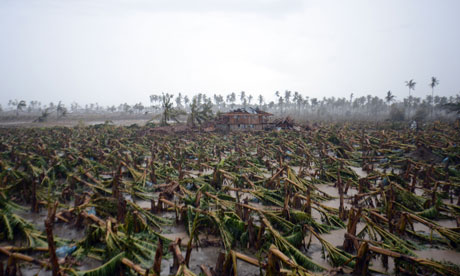
When super-typhoon Bopha struck without warning before dawn, flattening the walls of their home, Maria Amparo Jenobiagon, her two daughters and her grandchildren ran for their lives.
The storm on 4 December was the worst ever to hit the southern Philippines: torrential rain turned New Bataan’s river into a raging flood. Roads were washed away and the bridge turned into an enormous dam. Tens of thousands of coconut trees crashed down in an instant as unbelievably powerful winds struck. The banana crop was destroyed in a flash – and with it the livelihoods of hundreds of farmers.
The only safe place the family could think of was the concrete grandstand at the village sports stadium. Two months later, Jenobiagon, 36, and her three-year-old granddaughter, Mary Aieshe, are still there, living in one of the improvised tents spanning its steep concrete tiers along with hundreds of other people.
“We were terrified. All we could hear was loud crashing. We didn’t know what to do. So we came here,” Jenobiagon said. “Everyone ran to the health centre but houses were being swept away and the water was neck deep. Everywhere we went was full of mud and water. We went to a school but it was flooded, so we came to the stadium.”
Lorenzo Balbin, the mayor of New Bataan, said the fury of the storm was far beyond the experience of anyone living in Mindanao. It would take 10 years to replace the coconut crop, he said. Some villages in Compostela Valley may be too unsafe to live in.
Bopha, known locally as Pablo, broke records as well as hearts. At its height, it produced wind speeds of 160mph, gusting to 195mph. It was the world’s deadliest typhoon in 2012, killing 1,067 people, with 800 left missing. More than 6.2 million people were affected; the cost of the damage may top $1bn. As a category 5 storm (the highest), Bopha was significantly more powerful than hurricane Katrina (category 3), which hit the US in 2005, and last year’s heavily publicised hurricane Sandy (category 2).
With an estimated 216,000 houses destroyed or damaged, tens of thousands of people remain displaced, presenting a challenge for the government and aid agencies.
The lack of international media coverage of Bopha may in part be explained – though not excused – by western-centric news values, and in part by the high incidence of storms in the Pacific region.
The Philippines experiences an average of 20 typhoons a year (including three super-typhoons) plus numerous incidents of flooding, drought, earthquakes and tremors and occasional volcanic eruptions, making it one of the most naturally disaster-prone countries in the world.
But more disturbing than Bopha’s size was the fact that it appeared to reflect rapidly deteriorating climatic trends.
The five most devastating typhoons recorded in the Philippines have occurred since 1990, affecting 23 million people. Four of the costliest typhoons anywhere occurred in same period, according to an Oxfam report. What is more, Bopha hit an area where typhoons are all but unknown.
The inter-governmental panel on climate change says mean temperatures in the Philippines are rising by 0.14C per decade. Since the 1980s, there has been an increase in annual mean rainfall. Yet two of the severest droughts ever recorded occurred in 1991-92 and 1997-98.
Scientists are also registering steadily rising sea levels around the Philippines, and a falling water table. All this appears to increase the likelihood and incidence of extreme weather events while adversely affecting food production and yields through land erosion and degradation, analysts say.
Mary Ann Lucille Sering, head of the Philippine government’s climate change commission, is in no doubt her country faces a deepening crisis that it can ill afford, financially and in human terms. Typhoon-related costs in 2009, the year the commission was created, amounted to 2.9% of GDP, she said, and have been rising each year since then.
“Extreme weather is becoming more frequent, you could even call it the new normal,” Sering said. “Last year one typhoon [Bopha] hurt us very much. If this continues we are looking at a big drain on resources.” Human activity-related “slow onset impacts” included over-fishing, over-dependence on certain crops, over-extraction of ground water, and an expanding population (the Philippines has about 95 million people and a median age of 23).
“Altogether this could eventually lead to disaster,” Sering said. Unlike countries such as Britain, where changing weather has a marginal impact on most people’s lives, climate change in the Philippines was “like a war”. Opinion surveys showed that Filipinos rated global warming as a bigger threat than rising food and fuel prices, she said.
Even given this level of awareness, Bopha presented an enormous test for emergency services. Oxfam workers in Davao City, working with the UN, local NGO partners, and the government’s National Disaster Risk Reduction and Management Council (NDRRMC), quickly moved to the area to offer assistance. Oxfam has committed $2m in Bopha relief funds on top of its annual $4m Philippines budget. But the UN-co-ordinated Bopha Action Plan, which set an emergency funding target of $76m, has received only $27m so far.
The overall post-Bopha response has comprised three phases: immediate help, including the provision of shelter and clean water, sanitation and hygiene facilities; rebuilding and relocation; and mitigation and prevention measures.
“The first thing was to provide water bladders to the evacuation centre in New Bataan. We concentrated on providing emergency toilets and water systems,” said Kevin Lee, response manager for the Humanitarian Response Consortium, a group of five local NGOs. “We had a 15-strong team from Oxfam and the HRC, digging holes and putting in plastic pipes. Next we started looking at emergency food and shelter.
“The devastation was worse than anything I have ever seen. Up to 90% of the coconut trees were just flattened. That’s the local economy on the ground. And that’s really difficult to fix quickly,” Lee said. But his team’s swift action had positive results, he added. There have been no water-borne diseases in New Bataan and no outbreak of cholera.
The consortium has now moved on to longer-term projects such as building a waste management plant, setting up markets at relocation sites, and working on disaster risk reduction programmes, so that when the next typhoon hits, local people may be better prepared.
The Lumbia resettlement project outside Cagayan de Oro, in northern Mindanao, provides an example of what can be achieved. Here, victims of tropical storm Washi, which swept through the area in 2011, killing 1,200 people and causing nearly $50m in damage, have been offered newly-built homes on land owned by the local university.
The Lumbia project’s slogan is “build a community, not just homes”, and it has gone down well with displaced villagers. “It’s better here than before. It’s more elevated, we don’t have to worry about floods,” said Alexie Colibano, a Lumbia resident. “Before we were living on an island in the river. Now we feel more secure.”
About 15,000 Bopha victims remain in evacuation centres, including in the New Bataan stadium grandstand. In total, about 200,000 are still living with friends or relatives.
In Manila, meanwhile, Benito Ramos, the outgoing executive director of the NDRRMC, is busy planning for the next super-typhoon. “We are preparing for a national summit this month on how to prepare, including early warning, building codes, land use regulations, geo-hazard mapping, relocation and livelihoods,” he said.
But the bigger issue is climate change, which posed an “existential threat” to the Philippines, Ramos said. “We are mainstreaming climate change in all government departments and policies. If we don’t adapt and adjust, we all agree we are heading for disaster.”
Source: http://www.guardian.co.uk/world/2013/feb/17/filipino-super-typhoon-climate-change
A partnership for clean and safe water
PAGLAT, MAGUINDANAO: Fatima Salik holds up a plastic pack of foggy water and transfers a few drops of it onto a small card with a round middle section. She asks one of the persons gathered around her to move closer and observe the center portion of the card which is now slowly turning into a dark rosy color.
Fatima is a public health promoter from the organization A Single Drop of Safe Water (ASDSW). It has joined Unicef, Oxfam and ACF International in a joint effort to help ensure safer water sources, better latrines and handwashing facilities in emergency-stricken communities in Mindanao.
Fatima is testing a water sample from an open well in Barangay Damacaling in the municipality of Paglat in Maguindanao province for possible contaminants that may render it unsafe to drink. Much concern has been raised about the water quality in Paglat, which is often visited by floods. In addition, sanitation facilities here are severely wanting. This became much more evident when the town served as an evacuation site for hundreds of displaced persons from nearby towns fleeing conflict pirate ship jumper.
Many towns in Maguindanao province share Paglat’s dreary conditions that are further aggravated by recurring emergencies such as natural disasters and intermittent conflict.
To address this situation province-wide, Unicef and its partners are jointly implementing not just a water, sanitation and hygiene (WASH) program but one within the framework of climate change adaptation and conflict sensitivity.
Participatory risk analysis
One activity being Oxfam undertakes under the program is participatory risk analysis where communities define their risks associated with natural disasters and conflict. “The starting point is risk,” says Oxfam’s Noel Pedrola. “From there, we identify WASH behavior-related risks such as diarrhea and malnutrition. As to climate change, we explain to the communities that that disaster will come more often and with greater devastation. The intention is to make them take action and prepare themselves for such emergencies. Meantime, through a participatory process, we help them find solutions to reduce these risks. The result is a community that is more resilient,” Pedrola adds. The program aims to eventually institutionalize WASH by influencing the creation of WASH task forces and mainstreaming WASH-promoting policies and practices into the development plans of local government units, from the provincial and municipal governments to the barangay (village) councils.
Hanalyn Montaner, Unicef WASH specialist, says Unicef is supporting pilot projects in two of Paglat’s barangays, Tual and Damacaling, and several more barangays across five other municipalities.
Unsafe water risk
One of the key risks in communities is bad water quality. Unicef studies show that when water quality is poor and sanitation conditions are bad, children, more than their elders, are likely to get sick. This risk further multiplies when their mothers and other people who care for them do not —or do not have the facilities to —wash their hands properly. The children then are more likely to suffer from diarrhea, cholera, intestinal worms, typhoid and other diseases. When they do suffer from repeated bouts of water-borne disease, they are weakened, making them more susceptible to other diseases such as pneumonia, malaria, dengue fever and malnutrition.
Kevin Lee of ASDSW explains that assisting communities in identifying sources of water contamination empowers them and their governments to find solutions. For example, ASDSW helps identify flood-proof water points from where communities can draw their drinking water during the typhoon season. In times of drought or little rain, ASDSW points them to water sources that do not dry up.
Due to its expertise in water management, ASDSW is training volunteers and village officials in water quality monitoring. In all, it has trained 50 persons who are now re-echoing this knowledge by holding similar trainings in their respective communities. In most cases, training also involves barangay captains (village heads) not only to teach them water quality monitoring skills but also, and more importantly so, to have them appreciate the value of caring for their water sources in order to ensure their community’s good health.
With the assistance of ASDSW, the provincial government of Maguindanao has now built a water quality monitoring system covering over one million people across the province. Such system is assisting the government and communities to identify sources of water contamination that need rehabilitation.
Adapting WASH to emergencies
Unicef and its partners are also focused on providing assistance in emergency response. Plans are developed in close consultation with the community. Says ACF’s Marigold Feniza: “Having observed the pilot areas during the recent flooding period, we were able to identify possible sites beyond the reach of floodwaters. We explain to communities that climate change will mean that storms will be more frequent and intense, which gives participants more incentive to take action. Latrines and wash stands are therefore built on raised platforms. ”
The community helps in this effort by hauling the building materials to the identified sites and by constructing the latrines. Outside of the evacuation centers, when internally displaced persons return, Unicef’s partners assist them with community-based sanitation programs, where they will not only construct their own latrines but will invest in the materials and labor themselves. Marigold also points out that: “WASH is not only about facilities, it’s about changing key hygiene behavior such as washing hands with soap and using toilets. There is no point constructing a toilet if the community continues to openly defecate.”
Overall, the project has been cost-effective as it builds upon gains from an earlier-initiated project, the Building Resiliency in Communities (BRiC), also implemented by Oxfam. Says Abi Ayao, Oxfam public health promoter: “Through BRiC, we are able to identify risks in the communities and assist them to determine their needs for water, sanitation and hygiene facilities, including behavioral change that may need to be made. All these we keep in a database which has enabled us to share such information with other organizations like ACF and ASDSW, who are much willing to assist these communities in addressing their WASH gaps.”
“Such convergence of expertise and resources among partners, with Unicef as convenor, is now making it possible for poor and underserved communities to respond to their water, sanitation and hygiene needs from the perspective of risk. Ultimately, we want to create resilient communities, resilient women and children, and resilient local governing agencies that are capable of responding to natural disaster and conflict,” Tim Grieve, Unicef Philippines Chief of Water, Sanitation and Hygiene, said.
Source: http://www.manilatimes.net/index.php/opinion/columnist1/27480-a-partnership-for-clean-and-safe-water
Terminal Report: WASH Forum

Participants
 March 27, 2012, Koronadal City – A total of eighty eight (88) people attended the Province Wide Knowledge Sharing and WASH Form, representing ARMM, Maguindanao Province, municipalities, partner organizations, and guests.
From the regional level, the Vice Governor of ARMM was present together with her technical team. While at the Provincial level, the PPDC and heads of Provincial Planning and Development Office came and supported the activity. At municipal level, present were Mayors, Municipal engineers, MPDCs, and other LGU representatives. Government line agencies participated as well, such as DOH, IPHO, RPDO, DILG. Representatives from the peace-keeping forces such as PNP and AFP also attended.
Funders, international and national organizations were also present such as Oxfam, ICRC, UNDP, Zuellig Family Foundation and SHIELDS.
Local NGOs were also present such as UNYPAD, MERN, MAPAD, CEMILARDEF, Kadtuntaya Foundation, CMYC, MCDUI, MTB, MWDECC, BMWFPDAI, and KFPDAI. Religious organizations also graced the occasion such as the National Ulama Council of the Philippines (NUCP) and Noorus Salam. Noteworthy to mention was the presence of the community representatives who shared their experiences and stories on how WASH impacted their lives. Below is a detailed list of participants. Excluded in this list are security personnel by the local leaders, who are more or less 50 individuals
Programme
I Invocation
 Ustadaz Ibrahim Bajunaid from the National Ulama Council of the Philippines (NUCP) led the invocation.
II Welcome Remarks
 Mr. Kevin Lee, Executive Director of A Single Drop for Safe Water gladly welcomed the participants to the Provincial Knowledge Sharing and WaSH Forum. On his message, Mr. Lee gave appreciation on the efforts of Government Line Agencies and Non-Government Organizations in building the capacity, awareness, and infrastructures on WaSH.
Talking about development issue, Mr. Lee discussed why everyone should give attention on Water, Sanitation, and Hygiene. First, he mentioned that WaSH is not just about water system or toilets. WaSH entails governance, culture, religion and spirituality. It also talks on children who easily acquire water-related diseases and women who took the burden when everyone else is sick. And most importantly, WaSH also talks about poverty alleviation.
“WaSH generates wealth. If we are sick, our money is reduced as well as the income generation capacity” Mr. Lee said. However, he let the people realize that if we work on WaSH within the community, we can generate at least Php 600/year/person. It may not be a big amount of money but if we add it together for one barangay, it will produce at least Php 600,000 per year. This amount can be used by the community for shelter, education, and food.
Furthermore, Mr. Lee challenged the decision makers present in the WaSH Forum. He said “It is now time to see what has been done, what is needed, and what will be the resources available. The province of Maguindanao is rich in different resources in which the government can easily implement programs on WaSH. With this, there will be a big capacity for Maguindanao to implement Water, Sanitation, and Hygiene. Thus, if we will be able to link together all of these resources, we can certainly improve WaSH in Maguindanao”.
II WASH IN ISLAMIC CONTEXT

Ustadz Esmael W. Ebrahim, Commissioner of National Commission on Muslim Filipinos discussed Water, Sanitation, and Hygiene in Islamic Context. Ustadz Ebrahim emphasized that the issue on WaSH is not a new subject matter in Islam. It is a comprehensive topic that had been discussed even before the creation of this world. It was also stressed that without water, there would possibly be no life. Water is of profound importance in Islam, Ustadz Ebrahim said. Water is considered a blessing from God that gives and sustains life, and purifies humankind and the earth. Water occurred sixty three (63) times in the Holy Qur’an. Also, according to the Qur’an, the most precious creation after humankind is water. It is an essential need in life since men cannot survive without water.
Ustadz Ebrahim quoted verses from the Holy Qur’an that deal with importance of water. One of these verses was, “The key to Paradise is Prayer and the key to Prayer is purification”. Ustadz Ebrahim mentioned the relevance of this verse to water since the key to purification is water. Without water, Muslims will not be able to purify themselves and perform Salah (Obligatory Prayer). This also shows the major part of water in the belief of Muslims. According to Ustadz Ebrahim, these quoted verses from the Holy Qur’an were evidences that water in the lives of every Muslim individual is a necessity. It does not deal only with physiologic needs but it also pays attention on its purpose in purification. “We cannot live without water and we cannot also do our responsibilities as Muslims without water”, Ustadz Ebrahim mentioned.
Furthermore, according to the Shari’ah Law, water is divided into four kinds. The first kind is Mutlaq Water which is simply the natural waters found in this world (i.e. Rivers, Lake, and Sea). Mutlaq water is pure and can be always used for ablution but it is not allowed for drinking. The next kind is the used water for purification. After ablution, the water used can be reused as long as its cleanliness is maintained. Another kind of water is water mixed with pure elements which is a good source of water. And lastly, the fourth kind is water mixed with impure elements such as dead animals, pig’s meat, blood, emesis, urine, excrement, alcohol and dogs. This kind of water was sub-divided into two: first, if impure substances are present in the water and these substances alter the colour, taste, and odour, then it cannot be used for purification (Ibn al-Munzhir and Ibn al-Mulaqqin). However, if an impure substance is present but it has not altered the water’s taste, colour or odour, such water is considered pure and may be used for purification.
“Guard against the three practices which invite people’s curses: evacuating one’s bowels near water sources, by the roadside and in the shade” (Abu Dawood). According to Ustadz Ebrahim this hadith (saying of Prophet PBUH) clearly explains proper promotion of sanitation in which Islam also prohibits people in defecating anywhere and the usage of toilets and comfort rooms is obligatory in Islam. Moreover, the Prophet (PBUH) said, “Cleanliness is half of faith“. This is another statement served as evidence that Muslims should have proper hygienic measures for it is relevant in one’s faith. Lastly, it was strongly emphasized by Ustadz Ebrahim that Allah (SWT) said “Do not put your selves into destruction”. People now have knowledge and awareness about issues on WaSH, they now know how to detect contaminated water. Therefore, anything that may cause harm in one’s self should be avoided.
III MAGUINDANAO WASH SITUATIONER
 Dr. Tahir B. Sulaik, Provincial Health Officer, IPHO Maguindana, presented the WASH situation in the province of Maguindanao. He first gave a brief description of Maguindanao being the largest of the provinces having a land area of 5,425 sq. km. The total population of Maguindanao as of 2011 was 976, 300. Ninety percent (90%) of the population are Muslims and the rest are Christians and Indigenous People. Decision making lies on the male head of the family which resulted to majority of families are patriarchal in nature. Still, majority believes that abundance of children in the family is a blessing from Allah. The Maguindanao has only 69% literacy rate.
Dr. Sulaik also mentioned that the province faces both man-made and natural calamities forcing the populace to vacate their homes.
He quoted the 1987 Philippine Constitution which the IPHO strives hard to achieve “Health is a right of every Filipino citizen and the State is duty-bound to ensure that all Filipinos have equitable access to effective health care services”. Afterwards, Tahir B. Sulaik presented the organogram, vision and mission of IPHO showing the uniqueness of its services. Health facilities and human resources were also presented with exact figures. According to the presentation, more than 50% of the Barangays in Maguindanao have no Barangay Health Station. “IPHO was determined to walk the talk”. Dr. Sulaik also took the opportunity to congratulate the municipalities which has achieved 100% immunity. These were Sultan sa Barongis, Datu Paglas, Buluan, Mangudadatu, GSKP, Parang and 2 more.
One (1) rural sanitary inspector ideally should serve 20, 000 persons, but in the present situation in Maguindanao one (1) sanitary inspector was serving 69,735 persons. There are only fourteen (14) Sanitary inspectors and they are the ones who are primarily in charged on WASH, hence, affect the WASH situation in Maguindanao. Although the human resources is lacking, the IPHO organized groups to complement with this issue, such as Community Health Action Team (CHAT), Women Health Team, traditional birth attendant, households and BHWs.
The effect of WASH in Maguindanao can be manifested in the current health status in Maguindanao. As of 2011, Diarrhea ranks 4th and 5th in the leading causes of illnesses and deaths, respectively. Diarrhea ranks first (1st) as the leading cause of infant death due to dehydration, which is a great burden to the communities.
Health and sanitation programs are being given emphasis by IPHO on Maternal, Neonatal, Child Health and Nutrition (MNCHN) where WASH has a crucial role. Other programs include Control of Diarrheal Diseases, Deworming for the waterborne diseases, Dengue Prevention and Control Program, Malaria Prevention and Control program, Schistosomiasis Control Program, Filariasis Control Program, Food and waterborne Disease Control Program, Environmental Health and Sanitation, Disease Surveillance, and Health Emergency Management.
Dr. Sulaik also presented the gaps and challenges regarding governance, financial support, and partnerships. He was thankful to ASDSW because of the Water Quality Monitoring being started in all municipalities and IPHO will go deep into the barangay levels. Before ending his message, Dr. Sulaik encouraged strengthening partnerships among stakeholders and to having an intense collaboration with the local executives.
IV PRESENTATION OF THE PROJECT: INSTITUTIONALIZING WATER QUALITY MONITORING IN MAGUINDANAO PROVINCE
 Ms. Noraida S. Chio, Program Manager of ASDSW and Engineer Abo Khair P. Dalama, WaSH Focal Person of IPHO- Maguindanao, presented the project details and its accomplishments. At the onset of the presentation, Ms. Chio showed gratefulness and appreciation to the sectors involved in the project such as UNICEF, IPHO, and the Provincial Government of Maguindanao.
The objectives of the project were presented as well as the activities conducted in implementing the WQM Project. Engr. Dalama discussed the activities involved for the completion of the WQM Project. First, a coordination meeting with IPHO-Maguindanao was conducted to acquire full support and participation by the said institution. This was followed by courtesy call in thirty six (36) municipalities of Maguindanao to ensure proper coordination with the Local Government Unit (LGU). Engr. Dalama also mentioned the Jal-TARA Training of the ASDSW Staff to be more competent in providing services regarding water testing. This training was facilitated by one of the inventors of Jal-TARA Kit. Several activities followed such as Clustered WQM Training and On-site Coaching for 36 municipalities of Maguindanao. Project monitoring and Knowledge Sharing also occurred to ensure continuity of interventions and tracking of activities. And most importantly, Engr. Dalama emphasized the development of database as part of the activities of the project, where all WQM results are stored.
Every activity during the implementation of WQM Project has been a strong point in making the project successful. Ms. Chio presented the highlights of the project in order to update every sector involved and to inspire and encourage all LGUs to exert more effort in sustaining the project. Also emphasized was the counterpart of all municipalities in terms of food, transportation and venue during community-based activities. These efforts of both Local Government Unit and Rural Health Unit were indications that each concerned sector supported the project. Also, the 36 municipalities in Maguindanao implemented actions during on-site coaching more than what was indicated in their plans during the clustered training, a clear manifestation of interest and eagerness of LGUs and RHU personnel.
The success of the project was not only attributed to LGU and RHU’s effort. Community members in all municipalities also played a major role in the project. Communities appreciated the information they acquired on the quality of their water. Some even went to RHUs to check the result of their source. Upon knowing the results, interventions were done by each concerned individual. Also, it was strongly emphasized the contribution of local leaders or the Barangay Local Government Unit (BLGU) in assisting the WQM team in gathering data within their area. In addition, the number of sources tested and trained personnel were mentioned by Ms. Chio. She gave an accurate data of 1,449 major water sources tested in 36 municipalities under this project as compared to 200 targets. .
In every project, we cannot escape issues and challenges. Ms. Chio then shared trials encountered by the WQM team. One of these issues was some municipalities has no Internal Revenue Allotment (IRA) which cannot guarantee sustainability of the project and others has no sanitary inspectors who are expected to continue the testing. In addition, some results of the tests were only given to barangay leaders and not directly to the users of water sources. This resulted to non-transmittal of results to everyone using tested sources. Another issue was on some communities that do not recognize the significance of safe water for drinking. However, these challenges did not serve as hindrances in doing tasks during project implementation. It even made the team more eager in performing their responsibilities.
V VOICES FROM THE FIELD
 MR. RIZAL MANJARES, Bio-Sand Filter (BSF) User, Guindulungan Municipality
“Move on, and be positive.” This was what Rizal Manjares emphasized. According to him, we have the capacity to stand with our own. He mentioned that in Guindulungan, Talayan, DAM, and Talitay, water sources are mostly contaminated with E. coli. When Bio-Sand Filter (BSF) came, it was a miracle according to him. “A lifetime partner” was how he described the BSF because of improving the quality of their lives. “Prevention is better than cure,” and that’s what the BSF did. He relayed a story of one of his co-workers who has a sick child because of diarrhea. When the BSF was introduced, it became the solution to the contaminated water they have in their areas.
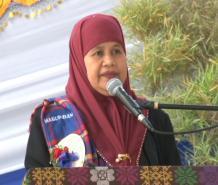 USTADZA ANISA T. ARAB, Project Director Noorus Salam
Ustadza Anisa T. Arab related how WASH affects life of women. She relayed the relationship of WASH and women in terms of education, health, safety, women empowerment, medication and purification. Women and girls bear the burden of fetching water which resulted to tardiness and missing out in school. For pregnant women, some of them have sanitation-related hookworm infections that pose a considerable health burden in developing societies.
Without access to latrines, many women and girls become ‘prisoners of daylight’, daring to relieve themselves only under the cover of darkness. This put them at risk of physical attack and sexual violence. Women and girls will have to travel far to obtain water, which can expose them to danger. For medications, mothers need water to relieve her sick child but the water must be potable to avoid the aggravating illnesses. In Islam, water also has a vital role in purification. It is also very important in praying to ensure the cleanliness of clothes and praying area.
Ustadza Arab added that women are not strong physically. In planning of putting up a source, the physical condition as well as needs of women who are the one fetching the water should be considered. Cooperation within different sectors such as Muslim religious leaders, LGUs and NGOs is very important. There are evidences showing that water and sanitation services are generally more effective if women take an active role in the various stages of the implementation.
 MR. DONNY LIMBA, Owner of improved dugwell in Mother Kabuntalan
One of the voices we heard from the field was by Mr. Donny Limba, owner of an improved dug well in Mother Kabuntalan, Maguindanao. He shared an inspiring message which talked about experiences on using unprotected dug well and the effects after the improvement of dug well with the help of ASDSW.
Major source of drinking water in Barangay Ganta, Kabuntalan, Maguindanao was an unprotected dug well. Most of the community members, especially the children, were utilizing the said dug well. However, Mr. Limba said they were uncertain on the safety of the source since most of the people were not conscious on the cleanliness of their drinking water. But a project was implemented in their barangay to improve the unprotected dug well they were using. Mr. Limba extended his outmost appreciation to ASDSW because of the improvement of their dug well. Through ASDSW’s initiative, the LGU and “bayanihan” from the people in Barangay Ganta, more dugwells were improved and the community currently has a clean source of drinking water.
 MR. NORODIN MAISALAT, Rural Sanitary Inspector of IPHO
Another story heard was from Mr. Norodin Maisalat, Sanitary Inspector III of Integrated Provincial Health office (IPHO) – Maguindanao. Primarily, Mr. Maisalat said the major issue here is the safety of water for drinking. It is a challenge for every sector involved in the Water Quality Monitoring Project. As Sanitary Inspector, Mr. Maisalat provided strategies to disseminate information on Water, Sanitation, and Hygiene (WaSH). Together with other sanitary inspectors, they conducted community assemblies in the municipality of Sharif Aguak, Datu Unsay, Datu Hoffer, and Sharif Saydona Mustapha. Their advocacy was to promote safe water for drinking which help people in preventing diseases.
However, one of the issues Mr. Maisalat has encountered was lack of Sanitary Inspectors in the province of Maguindanao. There are fourteen (14) sanitary inspectors on thirty six (36) municipalities. It clearly shows that the number of sanitary inspectors in Maguindanao is not enough for the community. Sanitary Inspectors are serving more than two municipalities to serve the people. In addition, Mr. Maisalat also mentioned that safety and cleanliness of drinking water was a necessity because water is a basic need in human’s life. It was then a challenge for these Sanitary Inspectors since they need to maintain the quality and safety of water in the community. Mr. Maisalat and the team accepted the challenge and implemented actions. They started to move forward since the reasons of contamination in the municipalities of Sharif Aguak, Datu Unsay, Datu Hoffer, and Sharif Saydona Mustapha have been discovered and actions have been taken to ensure access to safe drinking water and promote proper Sanitation and Hygiene.
VI CSO AND LGU TANDEM IN CHAMPIONING WASH: THE PARANG EXPERIENCE
 SUHARTO IBAY, Municipal Administrator of PARANG
Suharto Ibay, Municipal Administrator of Parang shared how Civil Society Organizations (CSO) and LGU tandem in championing WASH by relating the experiences of Parang, Maguindanao on WASH. He first gave a brief description on Parang stating that Parang is a small but first class municipality. However, Parang has no existing water system. Establishments are buying water usually from water delivery trucks. Understandably, issues on hygiene and sanitation are present.
Upon hearing the ASDSW and the successful project in Aleosan, Mayor Ibay took initiative to search for ASDSW to assist in the completion of the level III water system. Construction of said water system started more than 10 years ago, and now Mayor Ibay is challenged to pursue the implementation of the project. The water source in Macasandag is capable of sustaining water at least 15 years, according to the inspection done by Kevin Lee of ASDSW.
He presented the process that the LGU Parang together with ASDSW underwent through. He mentioned that a Municipal WASH Task Force was formed and there are already people from Parang like “little scientist” who were trained on biological and chemical testing. LGU officials were also capacitated to have an active involvement in the project.
He was proud as he verbalized “Parang is unique” because it’s a first time where LGU utilized its own funds to hire an NGO to assist them on the completion of their water system. He also mentioned that on that same day, LGU together with different sectors of their community are conducting tree planting to protect and preserve their two water sources.
VII PRESENTATION OF REPORTS GENERATED FROM THE DATABASE ON WATER QUALITY MONITORING
 To share sample of initial reports generated from the database was one of the objectives of the Knowledge Sharing for Water Quality Monitoring. Mr. Kevin Lee, Executive Director of ASDSW, discussed and presented the reports generated from the database. Initially, Mr. Lee asked whether WaSH is important to the development of Maguindanao or not. He emphasized that during the WQM Project, all thirty six (36) municipalities were targeted and provided immediate actions after the results were shown. These interventions were signifying development in each area. However, Mr. Lee emphasized “we were talking about long-term development issues since WaSH contribute to development. But to do development, all involved personnel should learn how to plan and mobilize resources in order to build WaSH capacity”.
He said that the province of Maguindanao achieved another development through Water Quality Monitoring. A database system has been created for the whole province to have proper storage of data collected during on-site coaching. This database was the first step of development after the project implementation. Also, the system doesn’t end after the activities done in the WQM Project, can actually see changes or updates to find out if there are improvements on the sources tested. The database also relates users from water sources in which person can see who are using such specific sources.
He further said, “we do not store data to fix water sources, instead, we will be able to find out who are the people exposed in contamination for them to prevent diseases”. Mr. Lee also emphasized that it is hoped that IPHO Maguindanao will be able to continue updating and storing data on the database to improve WaSH and to aid in providing details for planning. Also, in times of flooding or any disasters, the providers of interventions can look into the database to identify safe water sources for drinking.
Mr. Lee presented the advantages of database and actual figures on the results of on-site coaching. He also showed different charts and graphs to see the number of users, number of barangays targeted, number of sources tested per municipality and results of water tests. On the number of users, it was noted that most users were women and children. This is a good indicator since most of the funding agencies are concentrating to the burden of women encountered and children being at risk because of WaSH issues. In addition, to see the actual output of the database, Mr. Lee presented the system. He then challenged each municipality to act if they will see the levels of contamination in their municipality. Therefore, if LGUs will see high levels of contamination affecting large number of the community, they should have plans in fixing the contaminated water source.
“This database is a tool for the Province, a tool for LGUs, a tool for International NGOs to identify where you should be targeting main impacts, and also a tool for Local NGOs”, Mr. Lee stressed to the partakers. “The project Institutionalizing Water Quality Monitoring (WQM) doesn’t only tell people that their water sources were contaminated. Instead, the WQM project can help improve sources so that children will not worry on the future regarding their water quality. We have made a fantastic start”, Mr. Lee added. “But what should be done was not just to continue monitoring water quality but also to access resources in order to improve the water quality in Maguindanao”.
VIII INSPIRATIONAL MESSAGE
 TIM GRIEVE, Chief of WASH, UNICEF
“Thank you very much for the great work done”. This is how Tim Grieve expressed his utmost gratitude and appreciation to ASDSW, partners, IPHO, municipal and barangay representatives and to the communities. He also mentioned his appreciation to ASDSW for having a great coverage of 36 municipalities with great outcome using a little investment.
Tim Grieve discussed the importance of addressing WASH as a prerequisite in reducing poverty. He stressed the need to continue invesing in WASH Governance and capacity building and the need of multiple investments from multiple stakeholders to upscale good WASH programs (LGU, NGAs, communities, private sectors, and financial institutions). He shared that the global target for drinking water have been met, in which 2 billion people have access to safe drinking water since 1990. He also presented a chart which shows the trend for Sanitation in Philippines – JMP 2012 stated that the access to improved toilet in Maguindanao is 43%.
Before ending his speech, he again appreciated the program for being progressive and for giving the people of Maguindanao basis on deciding for their investment on their future and government.
IX KEYNOTE ADDRESS
 HON. BAINON KARON, Vice Governor, ARMM
She was thankful that despite her busy schedule she was present and witnessed this important event. She verbalized that she had seen the importance of water, sanitation and hygiene. She encouraged the support of LGUs and thankful to the partners from international communities. She mentioned that there is no reason not to support program like this because there is 20% funds for development programs from the IRAs. She encouraged collaboration with DOH, to Dr. Tahir Sulaik regarding health services.
 HON. DATU ESMAEL MANGUDADATU, Provincial Governor, Maguindanao
In behalf of the Provincial Governor of Maguindanao Hon. Esmael “Toto” Mangudadatu, Mr. Dave Utto presented the message of the governor. Before the presentation started, Mr. Utto extended Governor Mangudadatu’s apology for not being able to attend the forum because of health issues. However, the governor still extended his support in giving his message through Mr. Utto. The message talked about the importance of Water, Sanitation, and Hygiene. Having safe water is essential in everyone’s well-being. However, poor sanitation and hygiene are culturally attributed, but, these are contrary to Islam. Governor Mangudadatu quoted a saying of Prophet Mohammad (PBUH) which says, “Cleanliness is Half of Faith”, which indicated that if a person is impure, faith will not be accepted.
“We believe water, sanitation, and hygiene are essential to health”, Governor Mangudadatu emphasized to his message. This the reason governor already signed an Executive Order creating a Provincial WaSH Task Force. “Through this, we can ensure effective implementation of WaSH and enjoin all Local Chief Executives (LCE) to prioritize WaSH”. With this, Mr. Utto extended gratitude from Governor Mangudadatu giving emphasis on the effort made by A Single Drop for Safe Water in organizing the Water Quality Monitoring. Also, the office of the governor conveyed his appreciation to UNICEF on the support to development, protection, and survival of children in Maguindanao.

Prepared By:
Fatima O. Salik
Zuhaira U. Ebrahim
Junior Facilitators/ A Single Drop for Safe Water
Download full documentation in PDF
Kicking and Screaming

Kicking and Screaming!!! This was how we entered the field of Humanitarian Response in 2009……. now a few years later A Single Drop for Safe Water (ASDSW) as part of the Humanitarian Response Consortium (HRC) has just completed one of the largest responses to Tropical Storm Sendong.
On the evening of 16 December, heavy rains caused flash flooding that coursed through the cities of Iligan and Cagayan De Oro in Northern Mindanao, Philippines. Over 1,200 people died and 51,000 houses were partially or totally damaged as a wave of fast moving water coursed through the homes of our most vulnerable and under-served urban communities, taking lives, destroying; homes, livelihoods and infrastructure.
What happened over the next 3 months was a tribute to an idea. “That large responses can be locally driven and be extremely successful”. It saw an evolution of a way of working where young dedicated people in 4 organizations came together to provide not just relief but to rebuild lives while changing the way that Humanitarian Response can be done. We as a team not just stretched the envelope but tore the sucker wide open and challenged the status quo.
What we found was that:
- You can treat half a million liters of crap with a pit, hydrated lime and an irrigation pump.
- You can work with government and provide assistance to repair a city water system and get it operating before money arrives from central government.
- You can build markets at the camp site so to provide easy market access instead of having people use their money on fare going to distant markets.
- Cash For Work for IDP’s (Internally Displaced People) not only puts money back into the local market but is actually an efficient way to build on site.
- The cluster approach of agencies working together can work
- You can facilitate discussions between IDP’s and government to discuss the future and raise protection issues (that it irritated some agencies made it even more important)
- You can blow up a 10,000 liter water bladder
In the end the most important thing we figured out was that 40 individuals from 4 organizations with resources could significantly improve the lives of over 100,000 people, not just meeting basic needs but providing opportunities for people to take control and rebuild their own lives.
None of the interventions were technically innovative, but they were successful because of good old fashioned brainstorming, negotiation, risk-taking, persistence and belief in what was being done.
So what’s my point…. well 3 years ago we didn’t want to do this work because the way it was done harmed development….but we took the opportunity to make a change and we grabbed it with both hands….. the results are best expressed by others:
Mr Arman Ganzan “As a survivor of the flash flood, I realize that is it not about begging and receiving donations from the donors but finding a job that will support my family’s needs and pay for our daily expenses”.
Mr John Vidal Montilla “The Sendong tragedy should not be an excuse to feel hopeless. Rather, it should be a challenge to all victims to embrace life more resolutely. Specifically, I learned to value other people. Now, I am confident in dealing with them especially in questions relating to their livelihood. Helping them is not a waste of time rather it is a self-fulfillment.”
Mrs Emmelie Cinco “I was also able to join HRC – WASH seminar where I learned how to become a good leader, how to be strong and use humor in situations, and be an honest model to the citizens. Even though I did not become one of the WASH committee members, I was able to help organize our community in taking turns cleaning our areas and teaching them how to do so. Even though others were not cooperative, we, the leaders did not mind them; instead, we tried to change their views about having a better environment while coordinating with the WASH committee on the implementation of hygiene and sanitation.”
Mrs Dulcesima Rosal Fiel “The opportunity to speak out and be listened to would not be possible without the encouragement and opportunity provided by HRC-Oxfam. After my election as Camp Leader, HRC-Oxfam invited me to different seminars and trainings, which were very informative. I have learned about our rights as IDPs. From the trainings and through their examples, they have strengthened me as a leader, especially as a woman leader. They equipped me with knowledge and then provided me with support. Now, even with my soft voice, I am no longer afraid to speak out. As the IDP Camp Leader, it was expected of me to represent them. Most of all, as a woman leader, I am already empowered to do so.”
Kevin Lee
Executive Director
A Single Drop for Safe Water Inc.
Echoing Green fellow 2007
ASDSW wins the The Katherine M. Swanson Equality Award Laureate | 2010 Tech Awards
About The Tech Awards
The Tech Awards is an international awards program that honors innovators from around the world who are applying technology to benefit humanity.
Each year, candidates are nominated and then invited to submit applications. Individuals, for-profit companies, and not-for-profit organizations are eligible. International panels of judges review the applications and annually select 15 Laureates. Awards are presented in five categories: Environment, Economic Development, Education, Equality, and Health. Three Laureates in each category are honored and one Laureate per category receives $50,000. Laureates are honored at an annual Gala event and inducted into The Tech Awards Network (TAN). The TAN extends the award program from an annual event to a year round program. The goal of the TAN is to create opportunities for learning, networking, and exposure to assist the Laureates in furthering their work.
Hand Pump and Sanitation Facilities Manual – Draft
The Promised Land
by Mary Jun Decafe – Nicolasora
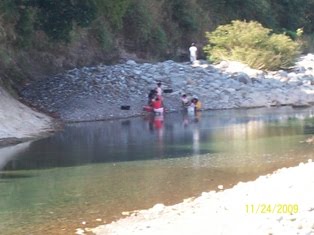
This is the river where the community fetch water prior 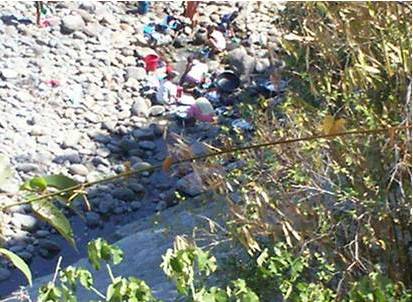
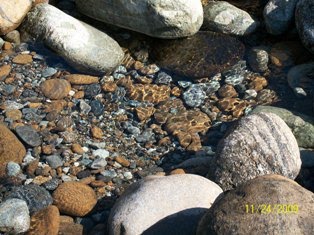
to the rehabilitation of their water system. This clear water
was dug on the river bank and is used for drinking.
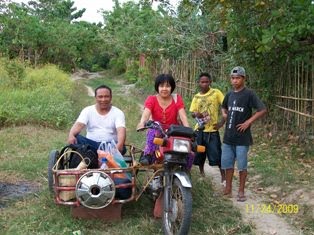
The team’s mode of transportation from and to Iba, Zambales for an hour bumpy ride.

The iBoP Research Team, Mr. Alejandro Pongyan and Ms. Luisa Lee during their data gathering in Lupang Pangako.
Ms. Lee is posing with the women members of the Aeta Belbel Multi – Purpose Cooperative near their non functioning water system. The same women were members of the ad hoc women’s group that emerged during the WAter, Sanitation and Hygiene (WASH) orientation conducted by ASDSW in December, 2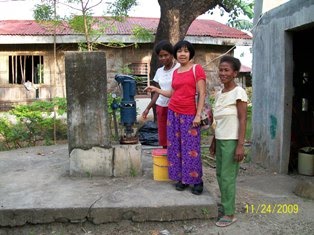 009. The WASH orientation was conducted as a response to the data gathered by the research team which told of numbers of death due to water – borne diseases. Other outputs related to this orientation were the acquisition of some community members of a 20L – water container and hyposol (chlorine – based disinfectant). Members of the women’s group were also tasked to advocate for the installation of a modified arborloo latrine per household in which by March of this year a total of 48 latrines were
 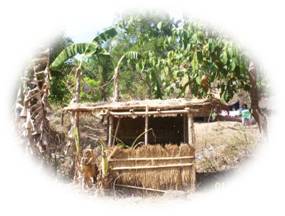 installed and from these, 30 were regularly used.
Because water – borne diseases were not just brought about by poor sanitation and hygiene practices but also because of the lack of clean and safe water source, another visit was conducted. This visit resulted to a signed agreement among other stakeholders – Office of the Department of Public Works and Highways – Iba (DPWH – IBA), Office of the Provincial Health (PHO), World Vision – Zambales, A Single Drop for Safe Water (ASDSW) and the community itself.
From this agreement, the community was able to access 157 more of 20L – water containers and hyposols from the Provincial Health Office under the leadership of Dr. Raulin A. Dadural and finally, clean and safe water from the DPWH, ASDSW and World Vision – Zambales under the leadership of Ms. Zenia Capiral and unwavering efforts of Ms. Vicky Layugan.
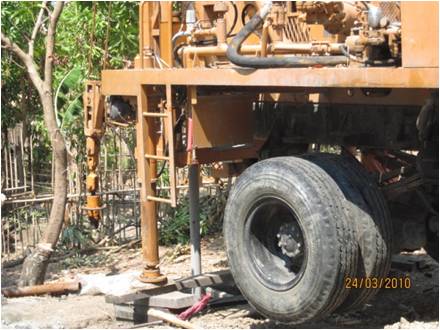
During the drilling in May. Drilling machine courtesy of the DPWH – Iba under the leadership of Engineer Herkules Manglicmot and Engineer Delfin Esposo who personally took charge in fulfilling their part of the agreement and more.
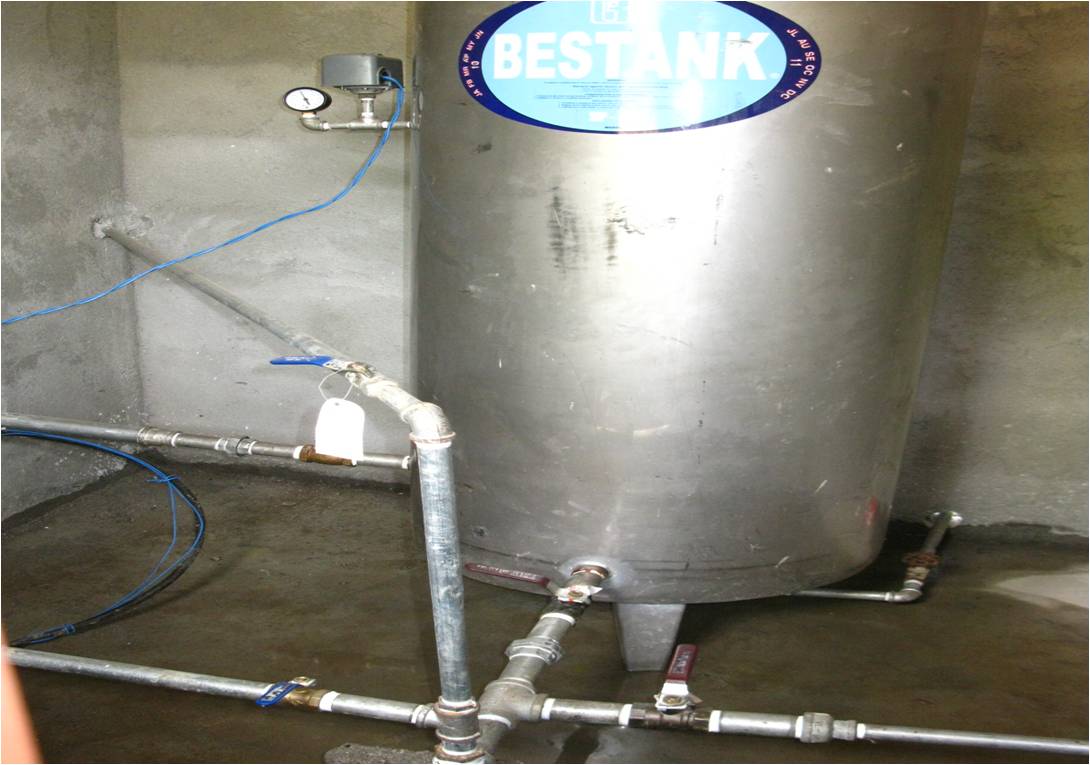
These are the facilities of the new water system of the Aeta Community in Lupang Pangako.

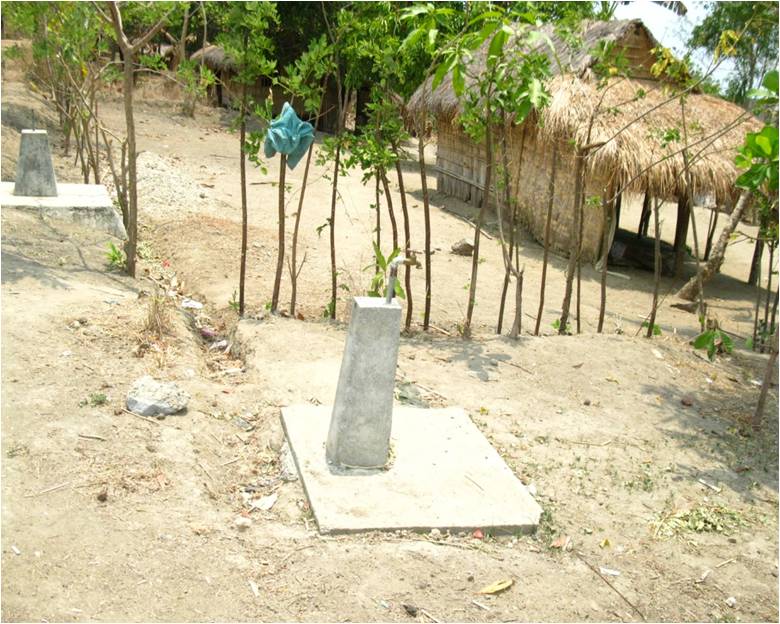 There are 4 tapstands in all.
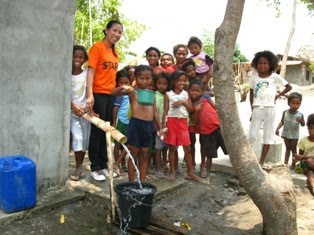
Finally, safe and clean water for Lupang Pangako!
Thru iBoP ASDSW has returned and addressed concerns of the Aeta community in Lupang Pangako.
The Promised Land
This is the river where the community fetch water prior
to the rehabilitation of their water system. This clear water
was dug on the river bank and is used for drinking.
The team’s mode of transportation from and to Iba, Zambales for an hour bumpy ride.
The iBoP Research Team, Mr. Alejandro Pongyan and Ms. Luisa Lee during their data gathering in Lupang Pangako.
Ms. Lee is posing with the women members of the Aeta Belbel Multi – Purpose Cooperative near their non functioning water system. The same women were members of the ad hoc women’s group that emerged during the WAter, Sanitation and Hygiene (WASH) orientation conducted by ASDSW in December, 2009. The WASH orientation was conducted as a response to the data gathered by the research team which told of numbers of death due to water – borne diseases. . Other outputs related to this orientation were the acquisition of some community members of a 20L – water container and hyposol (chlorine – based disinfectant). Members of the women’s group were also tasked to advocate for the installation of a modified arborloo latrine per household in which by March of this year a total of 48 latrines were installed and from these, 30 were regularly used.
Because water – borne diseases were not just brought about by poor sanitation and hygiene practices but also because of the lack of clean and safe water source, another visit was conducted. This visit resulted to a signed agreement among other stakeholders – Office of the Department of Public Works and Highways – Iba (DPWH – IBA), Office of the Provincial Health (PHO), World Vision – Zambales, A Single Drop for Safe Water (ASDSW) and the community itself.
From this agreement, the community was able to access 157 more of 20L – water containers and hyposols from the Provincial Health Office under the leadership of Dr. Raulin A. Dadural and finally, clean and safe water from the DPWH, ASDSW and World Vision – Zambales under the leadership of Ms. Zenia Capiral and unwavering efforts of Ms. Vicky Layugan.
During the drilling in May. Drilling machine courtesy of the DPWH – Iba under the leadership of Engineer Herkules Manglicmot and Engineer Delfin Esposo who personally took charge in fulfilling their part of the agreement and more.
These are the facilities of the new water system of the Aeta Community in Lupang Pangako.
There are 4 tapstands in all.
Finally, safe and clean water for Lupang Pangako!
Thru iBoP ASDSW has returned and addressed concerns of the Aeta community in Lupang Pangako.
Natural and Manmade Disasters in the Philippines
September 26th 2009, Typhoon Ondoy (Ketsana) made landfall in Luzon dumping over 12” of rain in 6 hrs on Manila and other parts of the National Capital Region. This caused massive urban flooding, 280+ deaths, destroyed homes and shelters of millions of people. Five days later, typhoon Pepeng (Parma) made landfall in northern Luzon, devastating agriculture in the Cagayan Valley. It then hung around the north west coast making landfall two more times and dumping up to 6’of water in some areas, causing massive and deadly landslides resulting in another 380+ people losing their lives. Dams in Luzon released water causing flash floods and many major cities are still flooded as government and relief agencies struggle to cope with the massive destruction. Currently there are approximately 500,000 people living in Evacuation Centers in Luzon and millions more piecing together their lives and living in areas that are still flooded. This is actually an annual occurrence affecting many areas of the Philippines. Typhoons in 2006 hit Manila and Bicol causing massive damage and loss of life.
It was absolutely inspiring to see the heroic efforts of those who helped in the immediate response to these disasters. Witnessing the resiliency and resourcefulness of people helping others, the outpouring of donations of money, food and clothing are a reflection of the generous human spirit. However, in the midst of all the generosity and relief efforts, astounding inefficiencies and lack of coordination can actually have a large negative impact on the rebuilding process. After the Bicol typhoons there was a call by many relief and government agencies to coordinate relief efforts and work together to prepare communities for these situations. Though there have been general meetings to mobilize local water and sanitation organizations and international relief agencies to develop protocols, emergency preparation efforts have been discussed, ideas proposed, but sadly, have not been coordinated nor implemented.
In general, there are four phases in addressing emergencies: preparedness, response, relief and rehabilitation. Each phase must be equally coordinated and strengthened in order to minimize risk and loss of life. In the Philippines, we are hard-pressed for strong and efficient protocols to roll out any of these phases for a few reasons.
First, the Philippines is the most disaster-prone region in all of Southeast Asia. Each year, typhoons and monsoons cause landslides, flooding and other devastating effects on communities all over the country. Also, with ongoing conflict in Mindanao, manmade disasters have caused major destruction in areas creating large populations of internally displaced people (IDPs). With the frequency of very different kinds of disasters, it has been difficult for communities as well as aid NGOs (non-governmental organizations) to try and implement effective and appropriate plans for preparedness and response.
Second, the inefficiencies of the stakeholders have been a deterrent in implementing emergency preparedness and disaster response protocols. Dealing with a number of large International NGOs (INGOs) and under-resourced government agencies with different strategies, techniques and target areas has made it difficult to organize any kind of coordinated efforts such as communications, info gathering and sharing, technology implementation and supply availabilities and distribution. To make matters worse, without these protocols in place, local government units have to wait for the Federal government to declare their areas disaster regions in need of federal support. Proper reporting from the field with the necessary information to make the declaration is crucial for timely and appropriate actions to be implemented.
Third, badly designed and implemented technologies such as toilets or wells have created adverse short term and long term effects on relief and rehabilitation. Technology implementation is often contracted out to foreign contractors with little experience in the country and focused only on immediate implementation with short term relief.
Further, we’ve found in working with these larger agencies who specialize in humanitarian relief that they have little or no basic documentation or manuals on how to build these facilities. There is very little quality control or follow-up and the failure rate is high. Although ASDSW is not a relief agency, we are in the process of developing materials along with these agencies so that response can be quicker and much more effective.
Lastly, because of the frequency of these disasters in the same general areas, local people have built a sense of resilience as it is not uncommon for many communities to live through the same tragedy more often than in other areas. Trying to mobilize communities and implement preparedness protocols in communities who have endured such disasters as frequent as many have, there is a sense of futility that overrides need for organizing.
With these recent typhoons, our projects in Luzon have been affected. One of our partner communities in Rizal Province located on an island in the middle of a river have been flooded out. Because of the sheer magnitude of the task ahead, ASDSW has two engineers working with to Oxfam to develop and implement better water and sanitation technologies and techniques. For example, one of our engineers has designed an innovative toilet on stilts or “loo with a view”, and is determined to develop a floating toilet (probably with a poop deck). We are also working towards better design for wells and rehabilitating existing wells as another way to ensure long term use in a case where the evacuation center must be used again in future disasters.
Regardless of the fact that some of the most devastating typhoons in our nation’s history have affected communities all over the Philippines in the last three years, this outcry has reached international audiences because it hit Manila, our country’s capitol. Pictures of flood devastated areas in the city prompted phone calls from celebrities pleading for help, which provided momentum for the mobilization of resources from within and outside the country. If Typhoon Ondoy had not hit Manila perhaps these efforts would have been severely under-resourced and the outcry over this tragedy may have been minimal as we’ve seen happen so often in the past.
As tragic as these natural disasters are, most people reading this, as well as most Filipinos that do not reside in the Autonomous Region for Muslim Mindanao (ARMM) do not realize that one of the worst ongoing disasters in the country, if not the world is occurring 1,600 km south of Manila. There has been ongoing conflict in this region for decades between the government and the groups Muslim Islamic Liberation Front (MILF) and Muslim National Liberation Front (MNLF). Peace treaties have been brokered and broken for years but in August 2008, peace talks between the government and MILF broke down. As a result, the numbers of people displaced has varied from 280,000 up to 1,000,000. Currently, this number is now estimated at 330,000 to 400,000 displaced people and is expected to remain until after the election in May 2010. Ongoing efforts by relief agencies have been hindered by the failure to cooperate from both sides as well as a lack of resources available or offered in the area. The withholding of food aid is occurring along with many human rights abuses violated on both the government and the MILF. This situation is worsening rapidly as dwindling resources already stretched thin in the region are now being diverted to Luzon for the typhoon relief.
Throughout 2008 and 2009 ASDSW worked hand in hand with seven Civil Society Organizations (CSOs), Peoples Organizations (PO) and Local Government Units (LGU) to build the Water and Sanitation capacity of thirty-one municipalities throughout ARMM. Reports from our staff noted nearby shelling while meeting with POs and LGUs; traveling to worksites through multiple check points; the killing of one of our CSO partners; trainings conducted while armed police and military looked on. Despite the ongoing conflict, ASDSW staff and our partners demonstrated tremendous dedication and kept faithful the belief we were doing the right thing.
As a testament to their hard work and relentless commitment, the culmination of over fifty small projects in these areas have implemented water, sanitation and hygiene (WASH) projects which have impacted over 5,000 families. To further ensure sustainability, we have established mechanisms in all thirty-one municipalities to help them design, plan and implement WASH projects. Nearly half are now functional and proactively implementing their plans.
ASDSW is now working with OXFAM and two other local CSOs to implement a better WASH strategy for Evacuation Centers and Home Based IDPs. This also includes the development of handbooks and designs to overcome the issues that are facing already installed interventions, e.g. sanitation, water treatment, wells. Because of the deep need in ARMM, ASDSW has opened a satellite office in Cotabato City, Mindanao.
As climate change impacts become more frequent and devastating, the development of disaster management protocols is crucial in mitigating risk. Investment to engage and educate the communities in appropriate preparedness, response and relief programs can make the rehabilitation and rebuilding of their own communities less devastating. ASDSW works with communities to build their resilience and better equip them for the impending disasters, which if the last three years proves, can be an annual expectation.
Kevin Lee and Gemma Bulos
Featured Videos
WaSH DRR Program in Capiz

Sanitation Marketing


Download ASDSW's 2011 Annual Report:


